My Career
Why I Chose Agriculture
My grandfather was a farmer, more specifically, a smallholder farmer in one of the most arid regions of the world, central Iran. He planted crops like saffron, barley, cotton and wheat. I vividly remember his resilience and unwavering dedication to farming against all odds. As a matter of fact, I think farming is the most resilient profession in the world.
Reflecting on those early years, I realize that he was the reason I chose agriculture as my profession. I wanted to support people like my grandfather, individuals who persevere through harsh conditions to provide food for others. That experience became the foundation of my purpose, my mission. I wanted to elevate farming through science.
Early in my career, I learned that agriculture doesn’t exist in isolation. I believe this is true for any discipline these days. The traditional boundaries between disciplines are disappearing and disciplines that once occupied unique niches are expanding their territories into each other’s. Later, I’ll share some of the technologies I’ve used in agricultural research.
My Journey in Agricultural Science
From Curiosity to Biotechnology
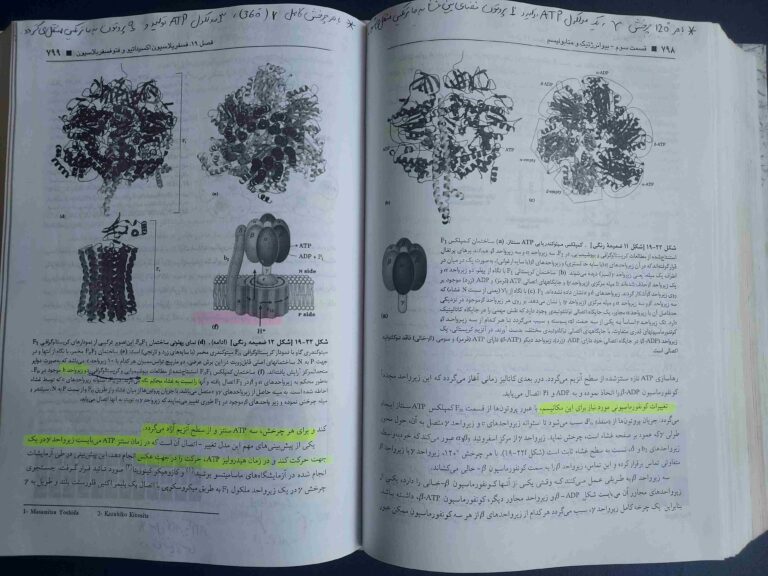
I remember one day I was reading “Principles of Biochemistry” by Lehninger and saw a section about how ATP synthase works in the mitochondria membrane (Figure 1). I was fascinated by the complex structure of the enzyme and how it is rotating to generate ATP.
Later in the same book I learned about “biotechnology” and how we can make recombinant DNA to transfer any gene from one organism to another. And I think that was it! It was my light bulb moment. I wanted to learn more about biotechnology. I wanted to break barriers between species. If you have such power, you can create anything you want and solve any problem. I was so naïve on that. Keep reading!
After learning the basics and receiving my bachelor’s degree in Agricultural engineering I then studied hard to enter the best “Agriculture Biotechnology” program in Iran that was offered by University of Tehran. Entering this program was very competitive. There were thousands of applicants, nationwide, who had to pass an entrance exam and only about the top five applicants were admitted into the University of Tehran. But my dedication was strong and curiosity to learn more about biotechnology was firm. I ranked first on the exam and entered my dream spot in university to learn more about biotechnology.
What Research Taught Me About Complexity
My master project in University of Tehran tackled one of the most pressing issues in Iran; soil and water salinity. I transformed a gene that previously showed promising effects on elevating the tolerance levels from Arabidopsis into canola using an Agrobacterium-mediated system. Although the resulting transgenic plants were indeed more tolerant, some unwanted features were accompanied. The plants were stunted, regardless of being under stress or not. Farmers won’t like it. This experience was my first encounter with the complexity of biological systems that translated to complexity of agriculture. After I concluded my MSc in Agricultural Biotechnology with that big lesson, I received Monsanto Beachell-Borlaug Scholarship to pursue my PhD at North Dakota State University (NDSU).
Bridging Science and Real-World Farming
I arrived at Fargo airport on a lovely afternoon in August 2009 to start my PhD in wheat research. Wheat is big in North Dakota, and I felt fortunate to land on a program focusing on wheat enhancement. North Dakota is the largest producer of Hard Red Spring and durum wheat in the U.S. My PhD thesis project was to unravel the cytoplasmic diversity in wheat and explore its potential in wheat improvement. That experience gave me a great perspective on how we can bridge basic and applied science. I also worked as a teaching assistant during this time, managing and teaching the Genetics course at NDSU. It was fun to maintain the population of Drosophila melanogaster and study the genetics of their eye color.
Flooding Tolerance in Dry Beans
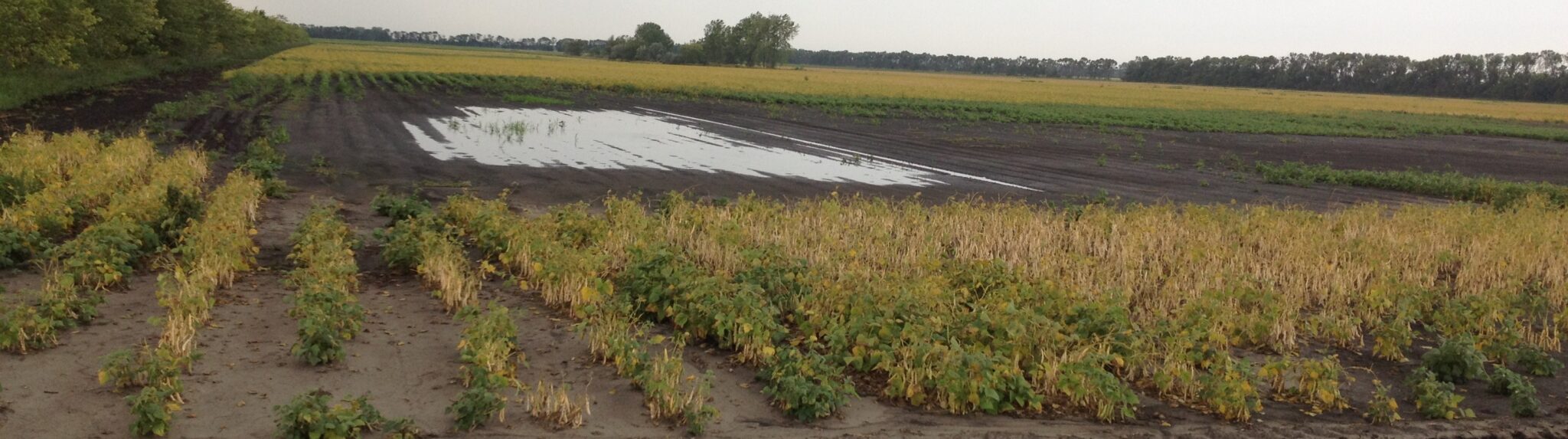
After my PhD, I moved from wheat into dry bean research, where I began tackling a new set of agricultural problems, flooding, plant architecture, and the practical realities of breeding crops for farmers. Common beans are quite important for states like North Dakota, another top national producer. Precipitation patterns have shifted in this state in a way that farms receive a lot of rainfall early planting season. And if drainage is poor, you can imagine, flooding can occur (Figure 2). On the other hand, most common bean varieties are susceptible to this stress.
My goal was to find tolerant varieties so breeders can use them in their program. Also to detect the genes (more accurately genomic loci) that are associated with flooding tolerance. In this way we can use this information to better breed for tolerant lines using methods like marker-assisted selection. One of the biggest challenges in this research was to develop a reliable phenotyping method (Figure 3) both in greenhouse and field that would allow me to test hundreds of bean varieties under excess water. Accurate phenotyping is one of the most challenging steps in Ag research and at the same time the biggest opportunity to collaborate with experts from other disciplines. Through flooding experience, I had developed some solid plumbing skills as well to mimic flooding situations in my experimental plots!

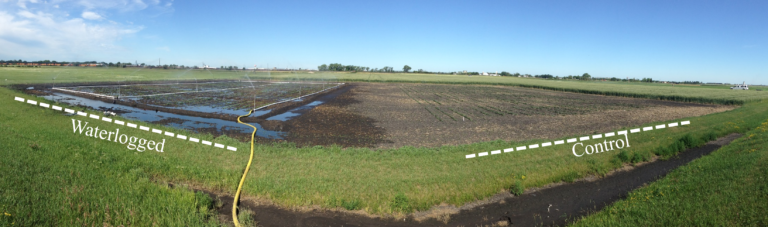
Figure 3. Developing a reliable phenotyping method in greenhouse (top) and field (bottom) for excess water stress.
Understanding Plant Architecture
For the first time in my career, I started working on a trait that doesn’t improve stress tolerance. Plant architecture has a rich history in modern farming practices. One of the most famous examples is the short wheat varieties developed by Norman Borlaug. In common beans, breeders want to develop upright plants for farmers so they can harvest them easily with combines (Figure 4). In addition upright plants have less contact with the ground and consequently are less prone to diseases. I was interested to learn what trait is the main contributor to upright varieties that were better adapted for mechanized harvesting.
I have performed extensive phenotyping of more than 30 traits across three field locations. We found out stem strength is indeed the most important contributor to upright architecture. But how can we quantify stem strength as a measurable trait, precisely and reliably? To answer this question, I paired up with colleagues at Mechanical Engineering department and developed a method to quantify stem strength. This method uses a device (Figure 5), which was very similar to guillotine, to measure how much force was needed to cut a stem. Stems were collected from the field and cut using the machine and we could measure how much energy we spent to cut it. I am happy we all kept our 10 fingers after this experiment.
After wrapping up my research at NDSU, I moved to Michigan State University (MSU) for my second postdoctoral position. There, I worked on four fascinating dry bean projects: Pythium resistance under flooding, heat stress tolerance (Figure 6), water uptake in beans, and interspecific crosses. Although I enjoyed all four, I want to highlight two that especially broadened how I approached agricultural research.
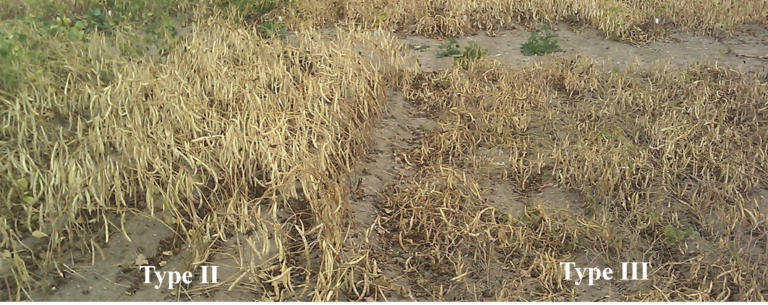
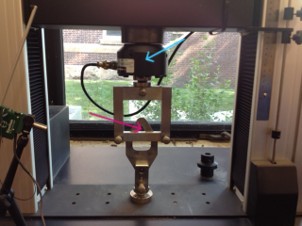
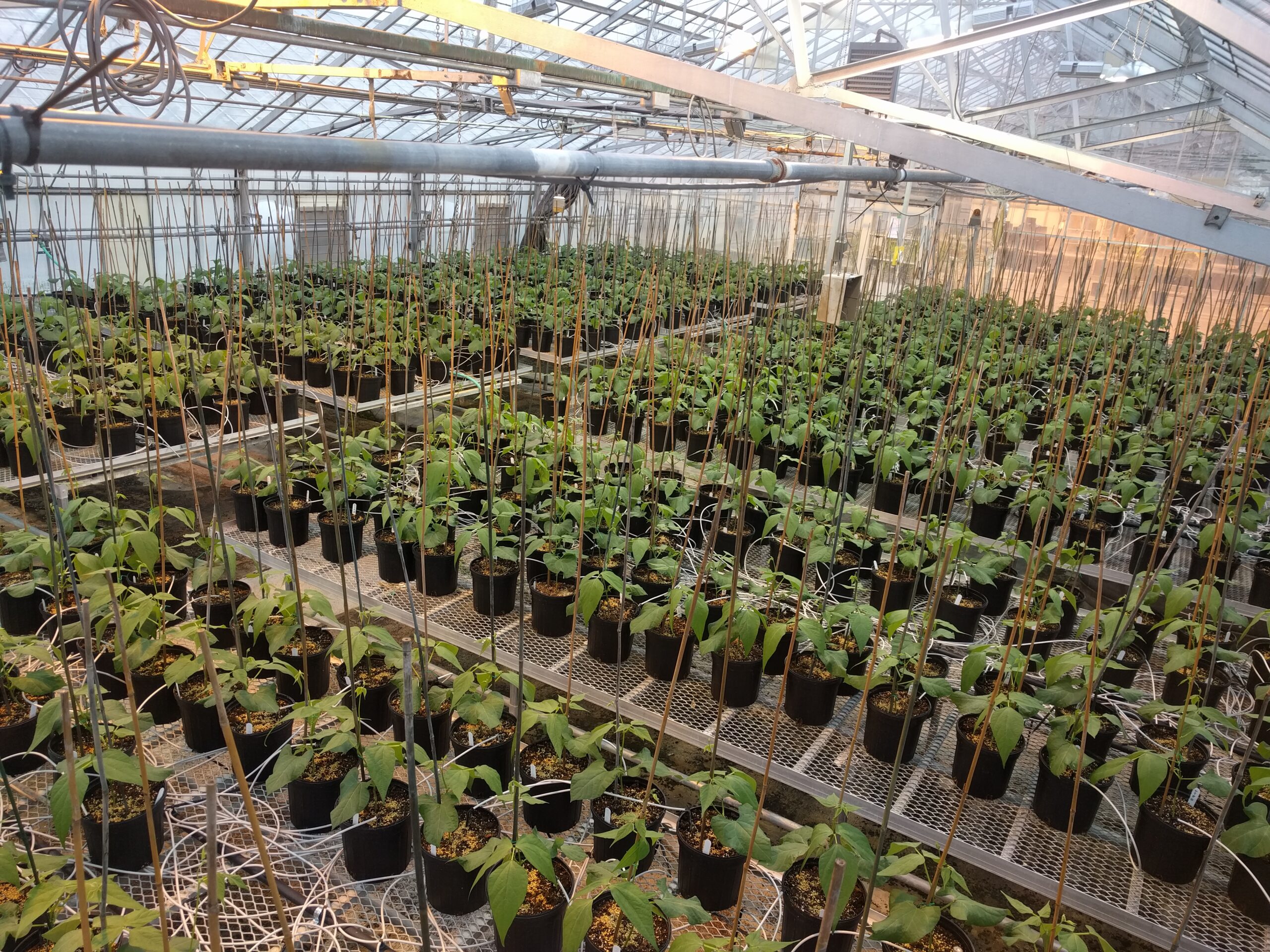
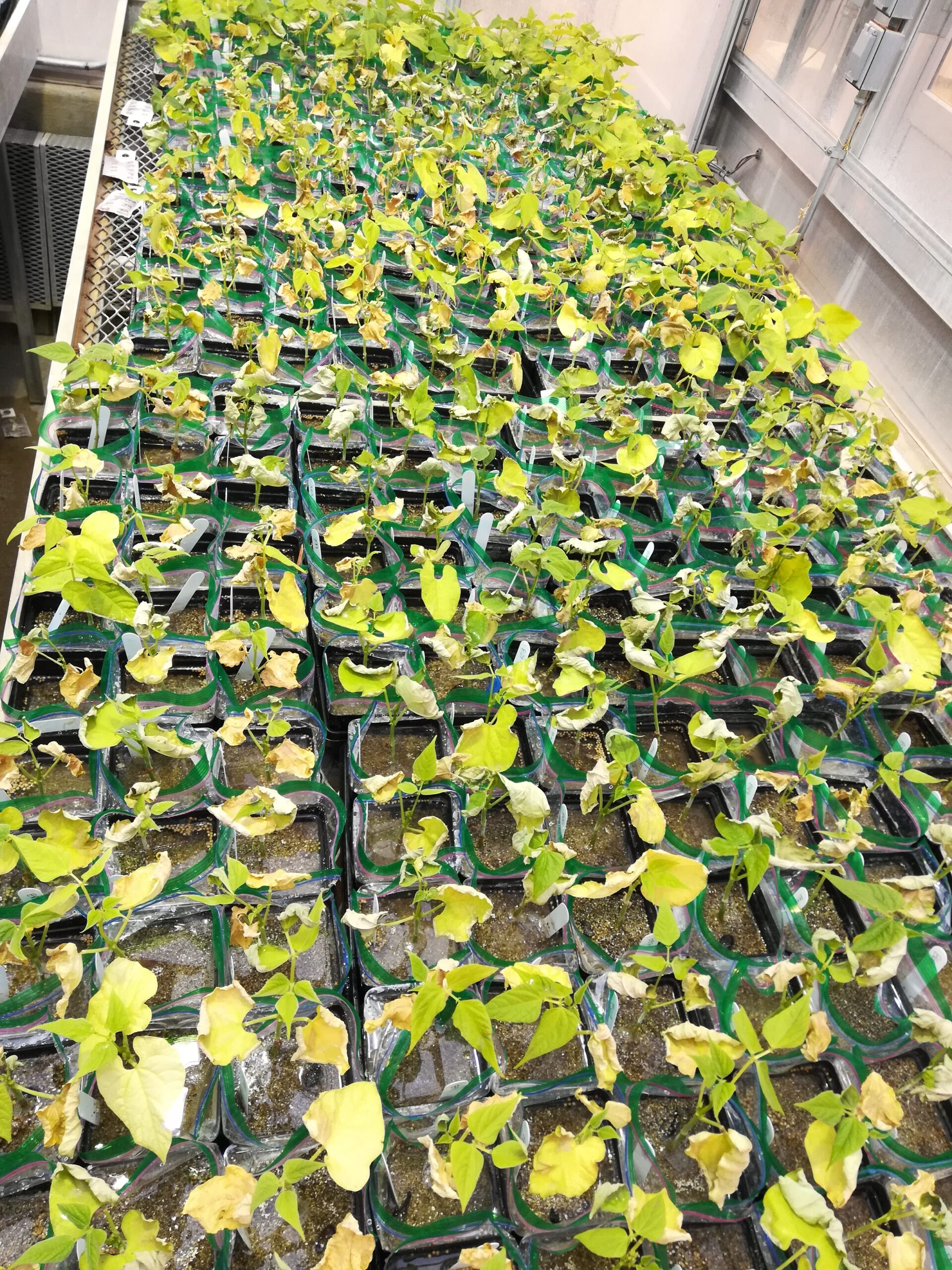
Figure 6. Testing multiple populations under heat (left) and Pythium (right) stress to identify tolerant germplasm and perform genetic analysis.
Applying X-Ray Imaging to Bean Research
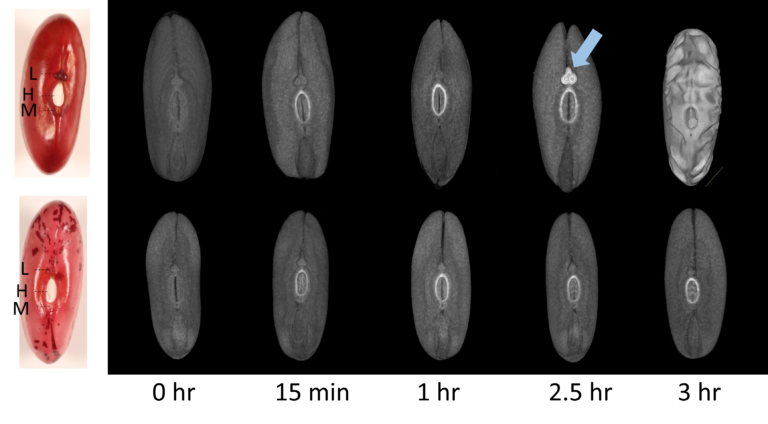
You might have heard of iodine-based contrast in diagnostic imaging. It’s basically an imaging method in which iodine enhances the visibility of vascular structures under X-ray imaging. Iodine has a high atomic number, higher than surrounding tissues in the body. Therefore, when X-rays hit iodine, most of the radiation is being absorbed so the iodine-concentrated areas appear brighter under X-ray imaging.
This is the same feature we wanted in our research: tracking water in beans. We had two varieties of beans, simply put, fast and slow in water uptake. Water uptake in beans has multiple economic importance such as time required to cook beans and how tolerant they are to excess water in the time of germination. Using X-ray imaging we were able to develop a phenotyping method (Figure 7) that could distinguish between fast vs slow water uptake beans quickly and precisely. We first soaked thousands of seeds in a solution containing iodine and then at different time points we examined them under X-ray. We were able to use this phenotyping method in genetic analysis and fine-mapping reliably. This is another example of how disciplines outside agriculture can strengthen agricultural research.
Breaking the Hybridization Barriers Between Species
In plant breeding, crosses are typically made only between individuals of the same species, which creates an important limitation. Useful genes and alleles may exist in closely related species, but transferring them into breeding populations is often difficult because of hybridization barriers. This is exactly the challenge in bean breeding. Domesticated common bean (Phaseolus vulgaris) varieties are often sensitive to heat and drought stress, whereas tepary bean (Phaseolus acutifolius) is tolerant to these and other environmental stresses. Yet direct crosses between common bean and tepary bean are generally not possible.
To overcome this barrier, researchers identified a common bean genotype that can successfully cross with tepary bean and serve as an intermediate parent. These genotypes are often called bridge lines because they connect the two species. I used one such bridge line to develop a pipeline for transferring alleles from tepary bean into common bean. The process begins by crossing the bridge line as the female parent with tepary bean as the male parent.
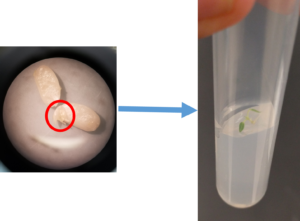
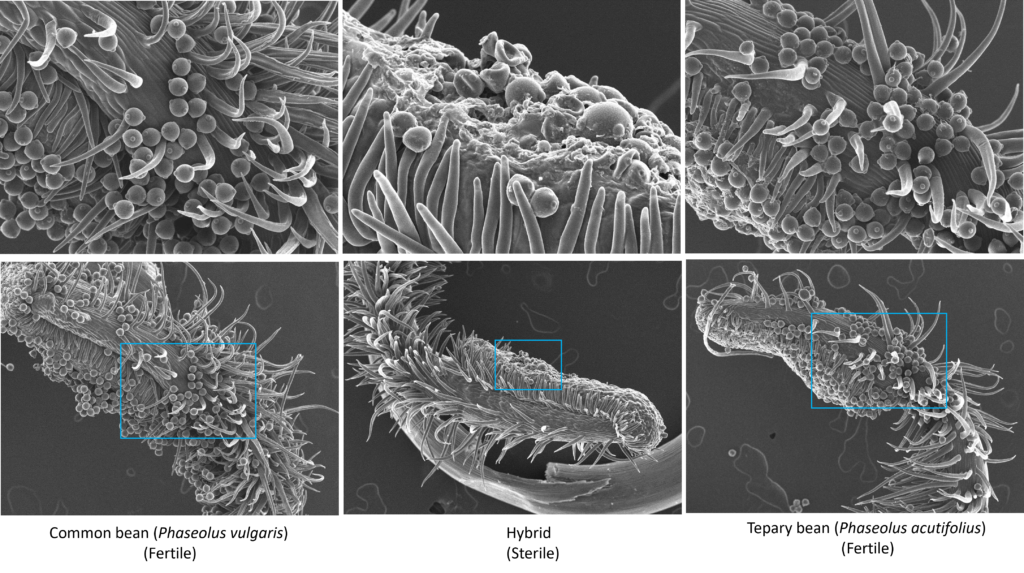
Because the embryos do not survive naturally, they must be transferred to a nutrient medium at a specific developmental stage, a process known as embryo rescue (Figure 8). Not all rescued embryos survive, but the hybrids that do are often exceptionally vigorous and much larger than either parent, a phenomenon known as heterosis. These interspecific hybrids are sterile (Figure 9), so they must be backcrossed to the bridge line to maintain the material and continue introgression. After this lengthy process, I recovered about 40 interspecific lines from thousands of initial crosses and hundreds of embryo rescue attempts.
Moving to Industry
After six years of postdoctoral research at NDSU and MSU, I moved into industry. I firmly believe that the agricultural industry drives global agriculture and has one of the greatest impacts on farmers’ lives. To broaden and amplify my own impact, I joined Bayer Crop Science.
My first role at Bayer was as a Genomics Data Scientist in Vegetable R&D, a position I held for nearly three years. I then moved into a new role as the lead of the Causal Variant Discovery team in Bayer’s Plant Biotechnology department. In these roles, I significantly expanded my skill set and developed a broader perspective on how agricultural innovations can be delivered to farmers at scale.