Bt Cotton in India: Success, Limits, and What We Actually Learned
When Bt cotton was introduced to India in 2002, it was widely seen as a breakthrough. For the first time, farmers had access to a genetically engineered crop designed to defend itself against destructive insect pests. The promise was compelling: higher yields, lower pesticide use, and better livelihoods for millions of smallholder farmers.
More than two decades later, the story of Bt cotton in India is often portrayed as either a triumph or a failure. The reality, however, is far more complex and much more interesting. This article looks beyond simple headlines to ask a deeper question: what did Bt cotton really achieve, why did its benefits change over time, and what lessons does this experience offer for modern agricultural technology?

A woman picking cotton in a field near Nagarjuna Sagar — Andhra Pradesh, India.
"File:Cotton picking in India.jpg" by Claude Renault (Crop applied by uploader) is licensed under CC BY 2.0.
Early Gains: Why Bt Cotton Initially Looked Like a Game Changer
Early studies painted a very positive picture. Research published in PNAS in 2012 reported that Bt cotton adoption led to:
- Yield increases of roughly 24%
- Lower production costs
- An overall improvement of about 18% in household living standards for farmers
Meta-analyses reinforced this optimism, showing that Bt adoption reduced chemical pesticide use by more than 30% on average. For farmers facing intense pest pressure, especially from bollworms, these results were hard to ignore. At the time, Bt cotton seemed to be delivering exactly what it promised.
The Long-Term Question: Was Bt Cotton the Real Reason for Higher Yields?
As more data accumulated, researchers began to revisit those early conclusions. A 2020 study published in Nature Plants challenged the idea that Bt cotton itself was responsible for long-term yield gains in India. Instead, the authors argued that improved yields were largely driven by changes in farming practices, particularly increased fertilizer use, not by the Bt gene alone. From a biological standpoint, this interpretation makes sense. No single gene can dramatically raise yield on its own. Bt cotton was engineered to protect yield by targeting specific pests, not to increase yield potential directly. In the field, yield is shaped by many factors: soil fertility, water availability, nutrient management, weather stress, and pest pressure among them. Seen this way, the initial surge in yield following Bt adoption may have reflected broader changes in inputs and management, rather than the genetic modification itself.
Pest Control Worked—Until It Didn’t
Where Bt cotton clearly delivered was pest control. It was highly effective against two major cotton pests:
- American bollworm (ABW)
- Pink bollworm (PBW)
This effectiveness led directly to a sharp reduction in insecticide use; one of Bt cotton’s clearest and most consistent benefits. But over time, a critical divergence emerged. Pink bollworm developed resistance to Bt toxins. American bollworm largely did not. Why? The answer lies in ecology. American bollworm is polyphagous that means it feeds on many different plant species. These alternate host plants act as natural refuges, maintaining populations of Bt-susceptible insects and slowing resistance evolution. Pink bollworm, in contrast, is monophagous. It feeds almost exclusively on cotton. With no natural refuge available, intense selection pressure favored resistant individuals, allowing resistance to emerge much more rapidly. This difference was not a minor technical detail. It proved to be decisive.
The Missing Piece: Refuge Strategy
What this experience exposed was not a fundamental failure of Bt technology, but a failure of deployment strategy. The concept of refuge, planting non-Bt crops alongside Bt varieties to slow resistance evolution, was known in population genetics and evolutionary biology. However, its importance was underestimated or poorly enforced in practice during the early rollout of Bt cotton in India. Without adequate refuge, resistance was not an unexpected outcome, it was inevitable. This intersection of ecology, genetics, and agricultural practice is one of the most important lessons to emerge from the Bt cotton story.
What Bt Cotton Definitely Got Right
Despite long-term challenges, one conclusion remains remarkably consistent across studies: Bt cotton significantly reduced chemical pesticide use. This matters. Lower pesticide application means:
- Reduced environmental contamination
- Lower exposure risks for farmers
- Evidence that the technology functioned biologically as intended, at least against its target pests
Bt cotton did what it was designed to do. What failed was not the gene, but the assumption that deploying a powerful technology without fully accounting for ecological complexity would be sufficient.
A Broader Perspective: Technology Is Learned, Not Perfected Instantly
It is tempting to judge Bt cotton harshly in hindsight. But doing so misses a broader truth about innovation. Most transformative technologies improve through iteration. Lithium-ion batteries, now essential to modern life, once suffered from serious safety issues. Over years of research, engineering, and regulation, those problems were identified and addressed. Agricultural biotechnology is no different. Bt cotton was introduced at a time when genetically modified crops were still in their infancy. The learning curve was real. The scientific community did not stop at early setbacks; instead, it adapted, developing better resistance management strategies, stacking traits, and improving deployment practices. Abandoning technology because of early missteps is rarely productive. Learning from those missteps is.
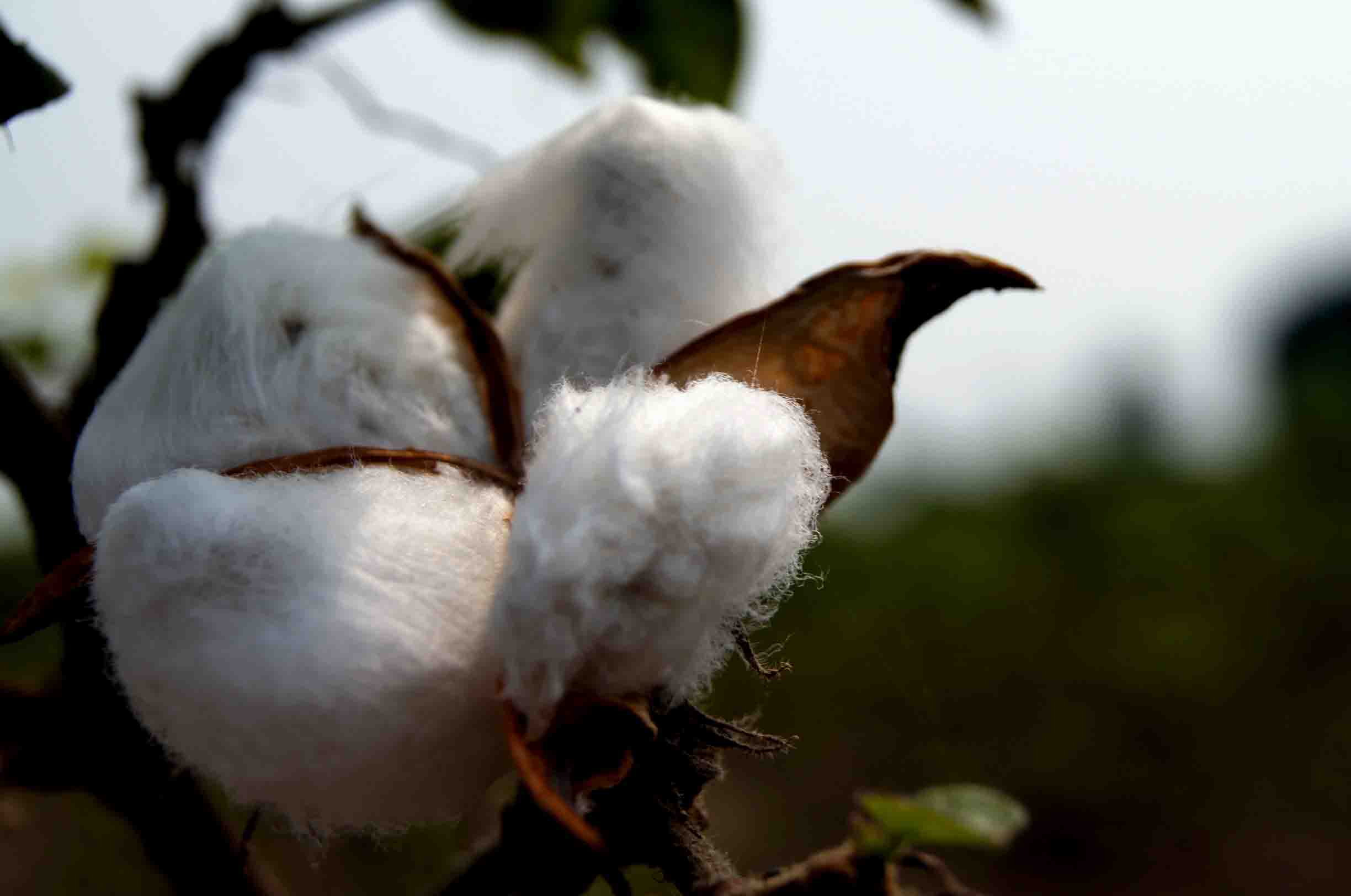
"BT cotton" by abhisheksrivastava is licensed under CC BY 2.0.
What the Bt Cotton Story Really Teaches Us
The story of Bt cotton in India is not a simple cautionary tale, nor a straightforward success story. It teaches us that:
- Biology matters as much as technology
- Ecology cannot be ignored
-Deployment strategy can determine long-term outcomes
- And most importantly, technology must evolve alongside our understanding of complex systems
Bt cotton did not fail agriculture. It taught agriculture how much more carefully innovation must be integrated into real-world ecosystems.
And that lesson may be its most valuable contribution of all.
Provide your feedback here: